
What Children Know About Training That Adults Have Forgotten
By Mentivis
MentivisOS launches a display campaign that gives the floor to those who have no reason yet to lie about what they want to become.
Mentivis, June 2026
There is an obvious truth that large professional training organizations have learned to work around: nobody chooses a profession to conform to a competency framework. You choose a profession because you once dreamed of being it. The MentivisOS display campaign starts there, with disarming candor. It entrusts its visuals to children's drawings.
Four posters. Four raw declarations, traced in pencil or gouache on white paper.
Poster 1: Do better.
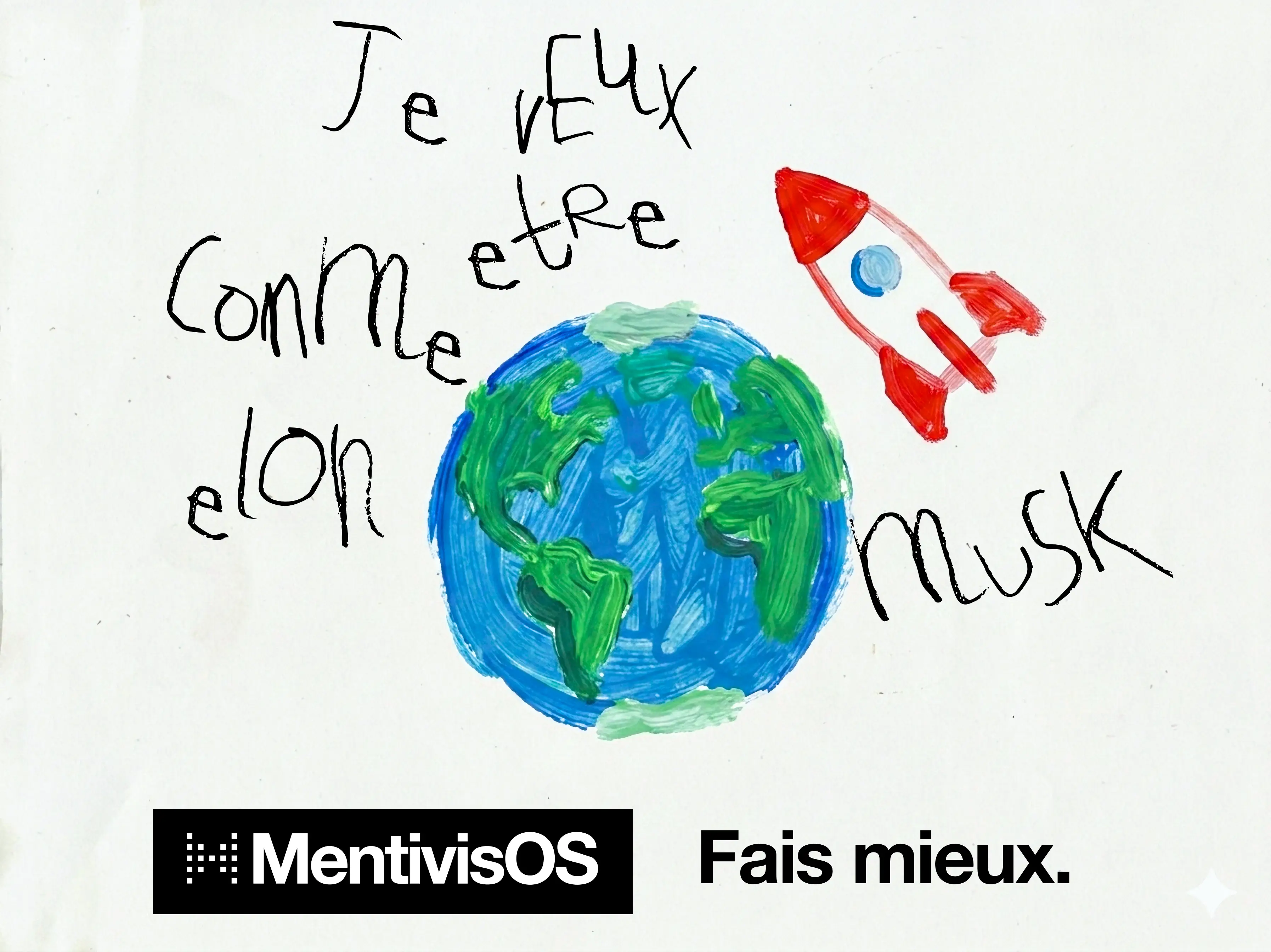
"I want to be like Elon Musk." A red rocket, a hand-painted globe, and at the bottom, the tagline that refuses without debating: Do better. This is not a provocation. It is a program.
Poster 2: It does everything.
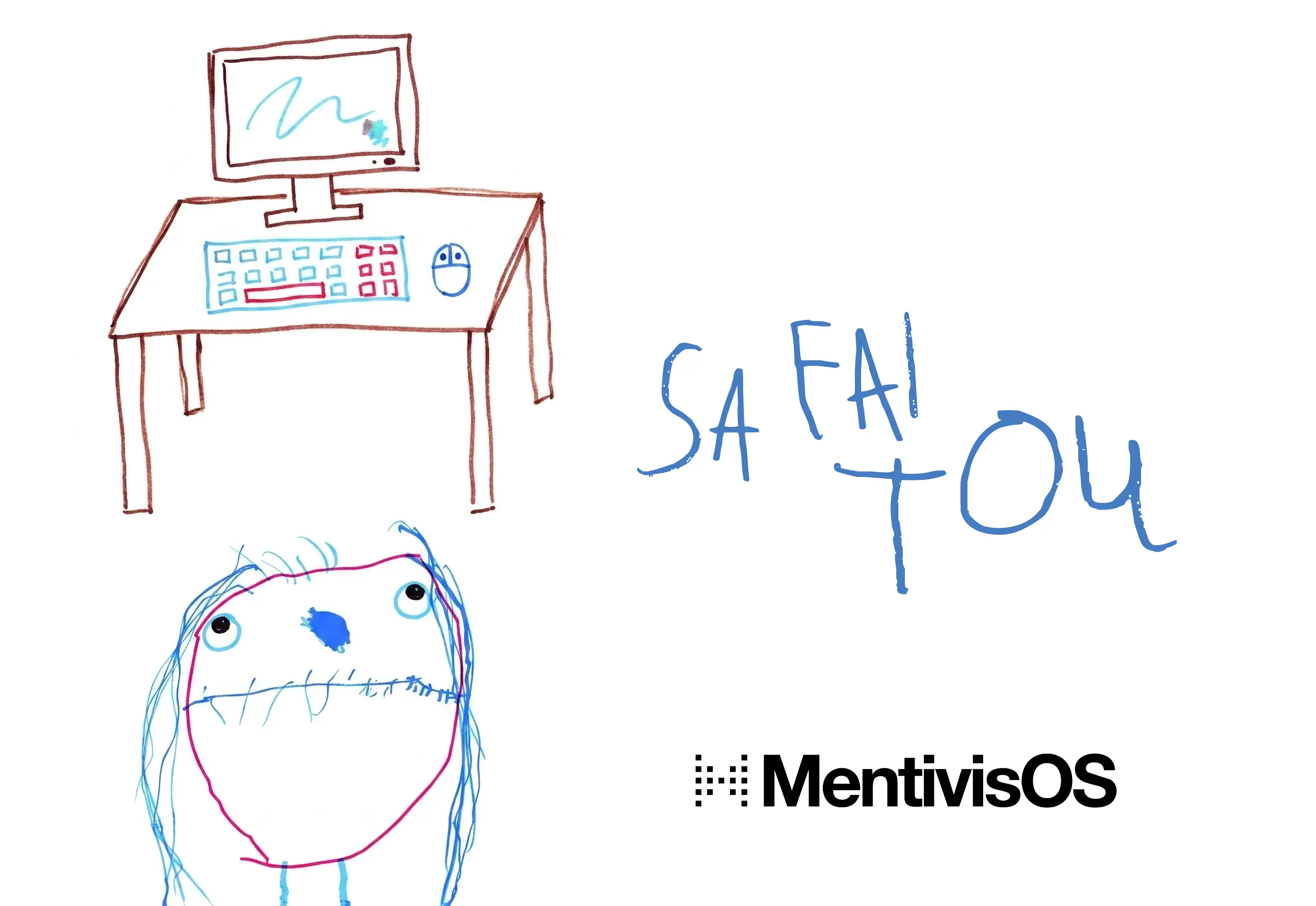
A crooked computer. A round-eyed figure. "It does everything." It is simultaneously the naive belief in technology and, by reversal, the question MentivisOS puts to its clients: does your tool really do everything, or is it missing what matters most?
Poster 3: Test. See. Adopt.
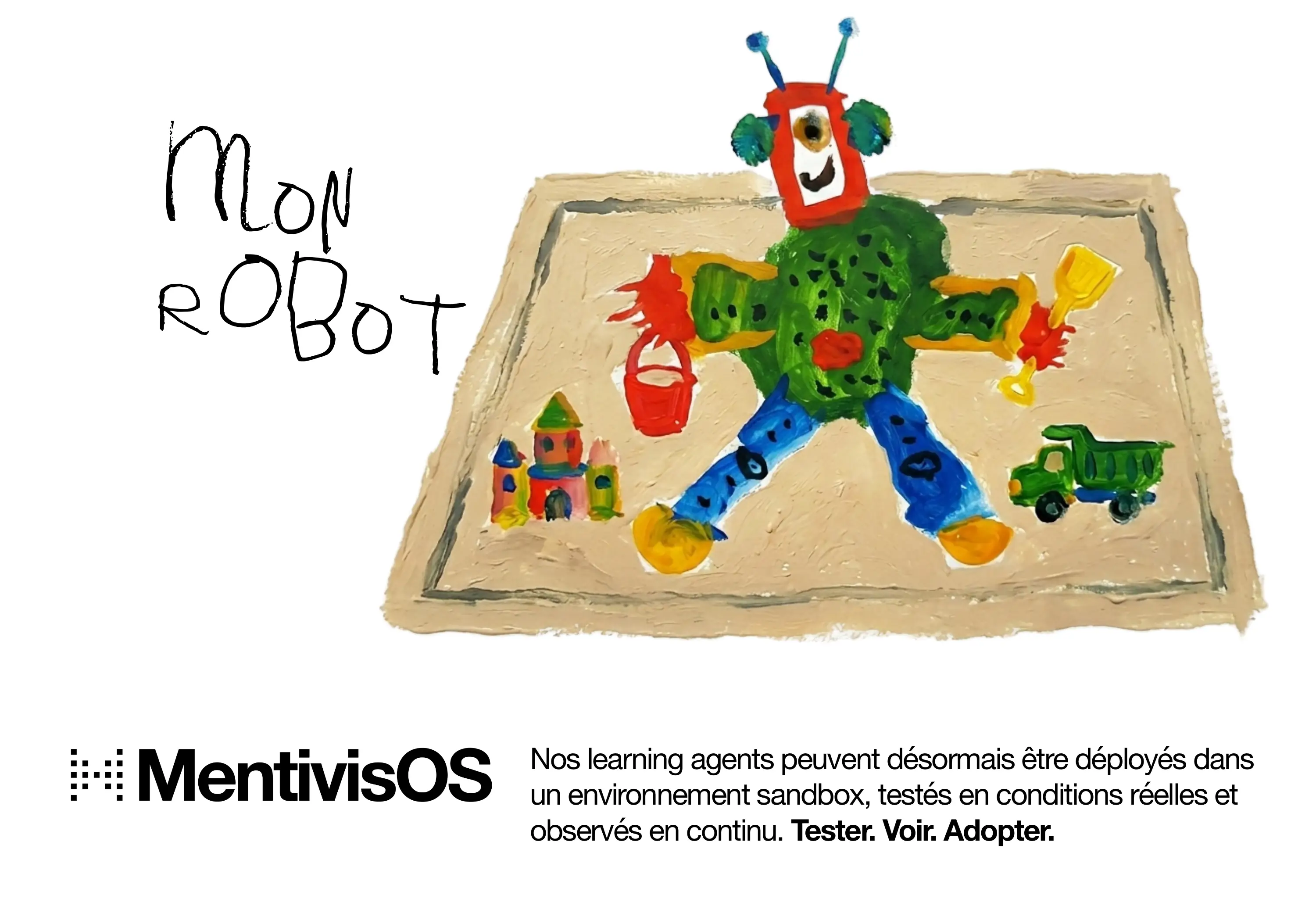
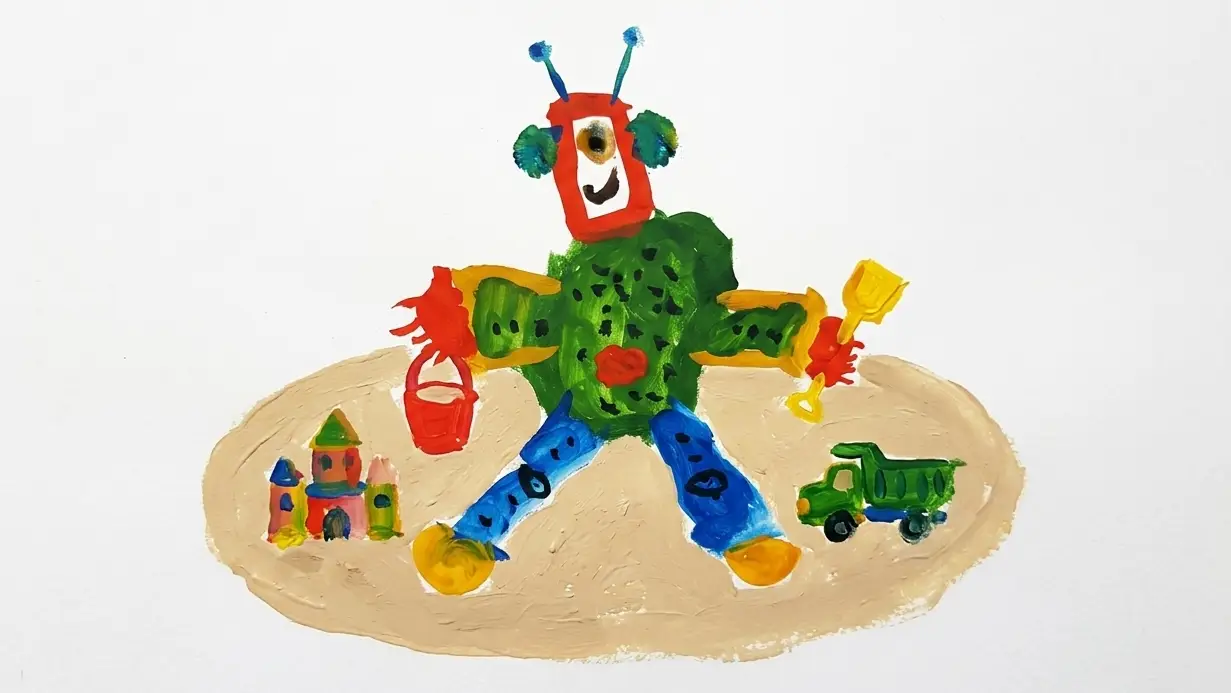
My robot. A colorful robot in a sandbox, with sandcastles and a green truck. The only poster to explicitly articulate a product feature: MentivisOS learning agents can now be deployed in a sandbox environment, tested under real conditions, observed continuously.
Our learning agents can now be deployed in a sandbox environment, tested under real conditions and observed continuously. Test. See. Adopt.
Sandbox is precisely the technical term for a controlled experimentation environment in computing, and it is also, literally, a child's play area. The metaphor is not grafted on. It is structural.
Poster 4: Becoming, for real.
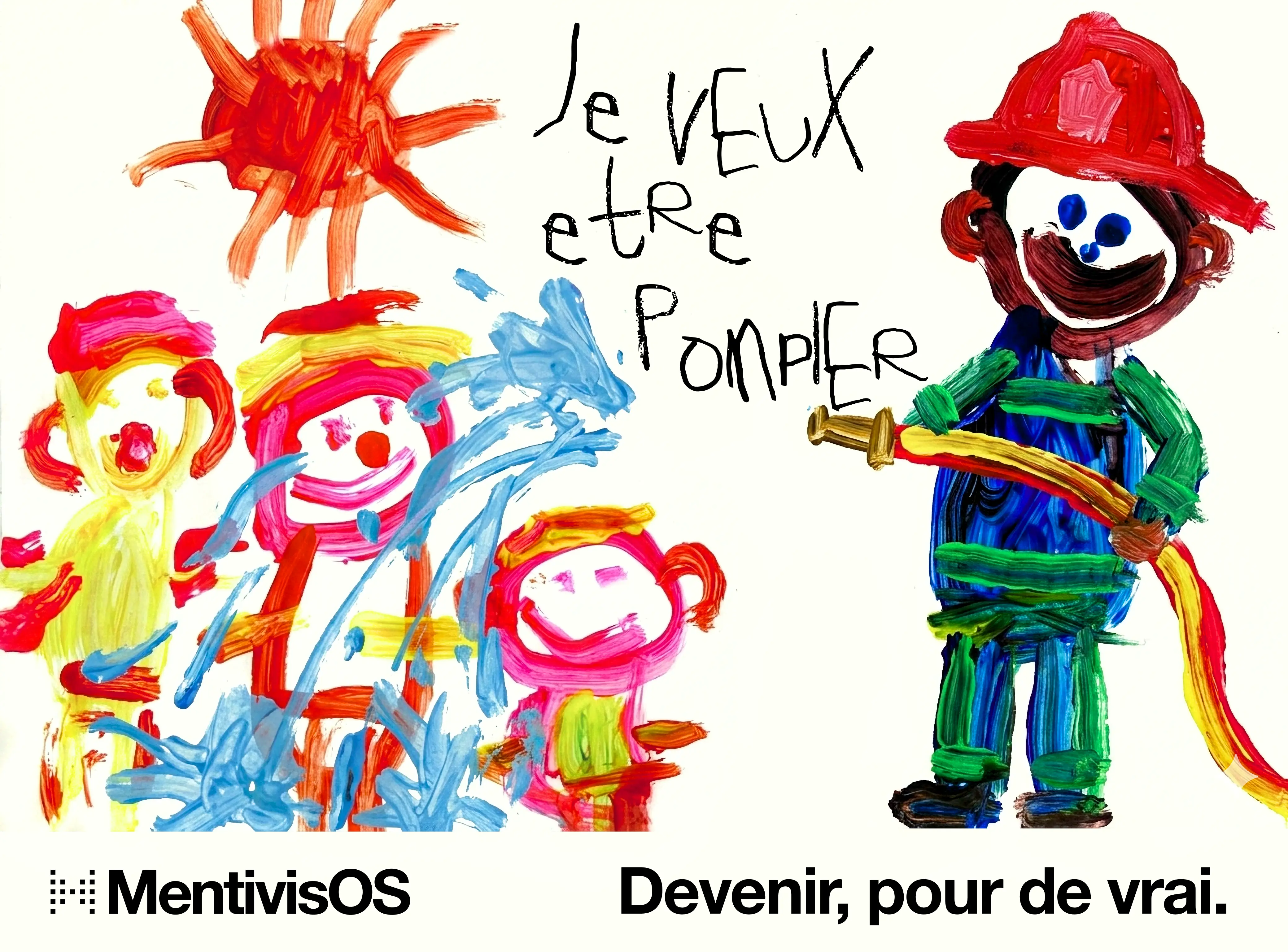
"I want to be a firefighter." An orange sun, a family painted in broad brushstrokes, a firefighter in a green uniform holding his hose. And the final tagline: Becoming, for real.
The "for real" is the whole stakes of the pedagogical approach: not simulating a competency in a training context, but deploying it in professional reality. It is the distinction between learning to do and knowing how to do.
A disruption strategy through calculated naivety
The professional and continuing training sector suffers from a chronic image problem: its communications speak of programs and mechanisms where learners are thinking about destinies. Catalogs line up module titles, durations in hours, CPF eligibility criteria. None of that vocabulary resembles what a six-year-old draws when asked what they want to do with their life.
MentivisOS executes the opposite reversal. By choosing children's drawings as its primary visual material, the campaign reconnects with the source of all learning motivation: the desire to become. Not to acquire a certifiable competency, but to become, for real.
This choice carries risk. It could be read as an easy advertising posture, the expected resort to childhood sentiment to generate warmth. That would be a misreading of the creative logic at work. Each visual articulates a precise tension between the raw drawing and the brand message.
MentivisOS as a competency operating system
The name itself deserves attention. MentivisOS is not called MentivisOS by accident. OS, for Operating System: the foundational software that makes everything else run, invisible when it is working well, catastrophic when it is absent. The metaphor states that Mentivis is not one tool among many in the training ecosystem. It is the layer on which everything else installs.
This is a demanding promise. It presupposes that the client organization is ready to stop managing its training as a collection of discrete projects and to accept a logic of continuous infrastructure. The campaign, by starting from children's dreams, simply makes that promise humanly intelligible: a competency operating system serves no purpose if the targeted competency is never connected to what the person, at their core, wanted to become.
"Do better" speaks to whom? To the child who wants to resemble Elon Musk: do not imitate him, surpass him. To the client organization: your current training does something; do it better. To Mentivis itself: do not settle for designing programs, build what genuinely changes trajectories.
"Becoming, for real" closes the campaign on a promise of outcome.
The MentivisOS campaign does not seek to seduce. It puts a question to its audience, training directors, HR leaders, learning designers, competency operators: is your current training system equal to what your employees, as children, wanted to become? If the answer is uncertain, the conversation can begin.
Mentivis, brand and communications